
Your product
We bring non‑sterile small molecule drug products to market with a practical, manufacturing‑ready approach.
Drug Product Dosage Forms
Batch‑to‑batch consistency
Groupe PARIMA supports programs spanning pre‑IND activities, NDA 505(b)(1), NDA 505(b)(2), ANDA, and orphan drug developments. Across liquids, suspensions, and semi‑solids, we address stability, viscosity, uniformity, and batch‑to‑batch reproducibility by making these variables predictable early in the project.
Smoother path to commercial
We support our clients with quality-first execution and a clear plan to reduce uncertainty and ensure smoother stage transitions.
De-risking the dosage form
We address stability, uniformity, and process challenges to support predictable scale‑up.
Repeatability at scale
Controlled development and process understanding ensure predictable batches and release confidence.
A clear path to the next STEP
We translate your needs into an achievable plan across development, manufacturing, and packaging.
Your Product Path
For more than 30 years, Groupe PARIMA has supported teams delivering non‑sterile drug products with consistent performance and reliable manufacturing outcomes.

Liquid Drug Products
Consistent performance at scale
We control physicochemical properties, stability, and packaging compatibility to maintain consistent liquid drug products at scale.
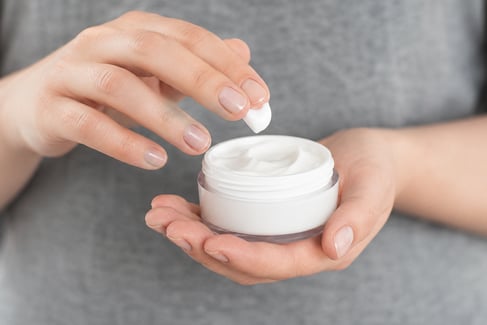
Semi-solid drug products
Designed for uniformity and stability
We ensure batch‑to‑batch uniformity and a robust manufacturing process to maintain semi‑solid drug product performance.
Suspension drug products
Homogeneity control for shelf-life performance
We develop and manufacture suspensions with controlled homogeneity for consistent performance.
Pharmaceutical drug products
GMP-compliant development and manufacturing
For Rx and OTC programs, we support execution with integrated quality systems and reliable supply.
Natural Health Products
GMP standards for quality production
For NPN and homeopathic products, we support repeatable production through controlled manufacturing and packaging processes.
Orphan drug products
Flexible manufacturing for niche market therapies
We support orphan drug products through flexible manufacturing and packaging capacity.
Your Stage
We scale production at each stage to support development, prepare for regulatory submission, and sustain commercial supply.

Early-Stage
Confirm feasibility, identify key risks, and establish a manufacturing‑ready foundation for your drug product.

Late-stage
Refine formulation and process controls to ensure robustness and repeatability while preparing for scale‑up and validation.
Commercial Stage
Execute commercial batches through strong documentation and ongoing process improvements to ensure reliable supply.
Our role is to reduce uncertainty by linking development, analytics, and execution from the start.
Our Services
Explore the questions sponsors usually ask to reduce risk and ensure predictable delivery.
Product Development
Manufacturing-ready development that reduces rework later, with decisions that scale as requirements increase.
Analytical Services
Clear data for decision-making stability plans, and confident release as your program progresses.
Manufacturing & Packaging
Consistent execution designed for predictable release and routine supply, with controlled changes over time.

FAQ
Explore the questions sponsors usually ask to reduce risk and ensure predictable delivery.
01.
What should we evaluate first when choosing a CDMO for drug product development and manufacturing?
Start with proven technical fit, then validate quality, maturity, capacity, and governance. Groupe PARIMA’s take: fit is not only equipment. It is the ability to execute your scope with consistent controls, clear communication, and predictable delivery once the program is in motion.
02.
What typically changes when a drug product moves from development to routine manufacturing?
As a program advances, expectations around documentation, controls, and consistency become more demanding. Groupe PARIMA adapts the execution readiness to match the stage, so scale-up does not introduce avoidable surprises. Practically, this means tightening in-process controls, strengthening documentation, and ensuring the process can run repeatedly with predictable outcomes.
03.
Why do scale-up challenges differ across liquids, suspensions, and semi-solids?
Because each dosage form responds differently to mixing, shear, hold times, and packaging, and those effects amplify at scale. Groupe PARIMA treats scale-up as more than a size increase. We focus on the specific failure modes that tend to appear by format, for example, stability risks in liquids, sedimentation and dose uniformity risks in suspensions, and rheology and consistency risks in semi-solids.
04.
When should a sponsor confirm packaging strategy for a non-sterile drug product?
Confirm packaging strategy early, before finalizing the process and stability plan. Groupe PARIMA brings packaging considerations into the decision path early because container closure choices can affect stability and compatibility. Regulators expect appropriate container closure documentation and control.
05.
What should sponsors evaluate first for non-sterile liquids, suspensions, and semi-solids?
Start with a proven fit for the dosage form, then confirm quality oversight, transfer readiness, and change control. Groupe PARIMA’s take is that “fit” is not only equipment or batch size. It includes how a CDMO runs the program: clear roles, clear documentation expectations, and a quality system that supports reliable execution and controlled changes over time.
CONTACT US
Need a CDMO for a non-sterile product?
Share your dosage form, development stage, and target timeline. We’ll route you to the right experts and outline next steps quickly.